
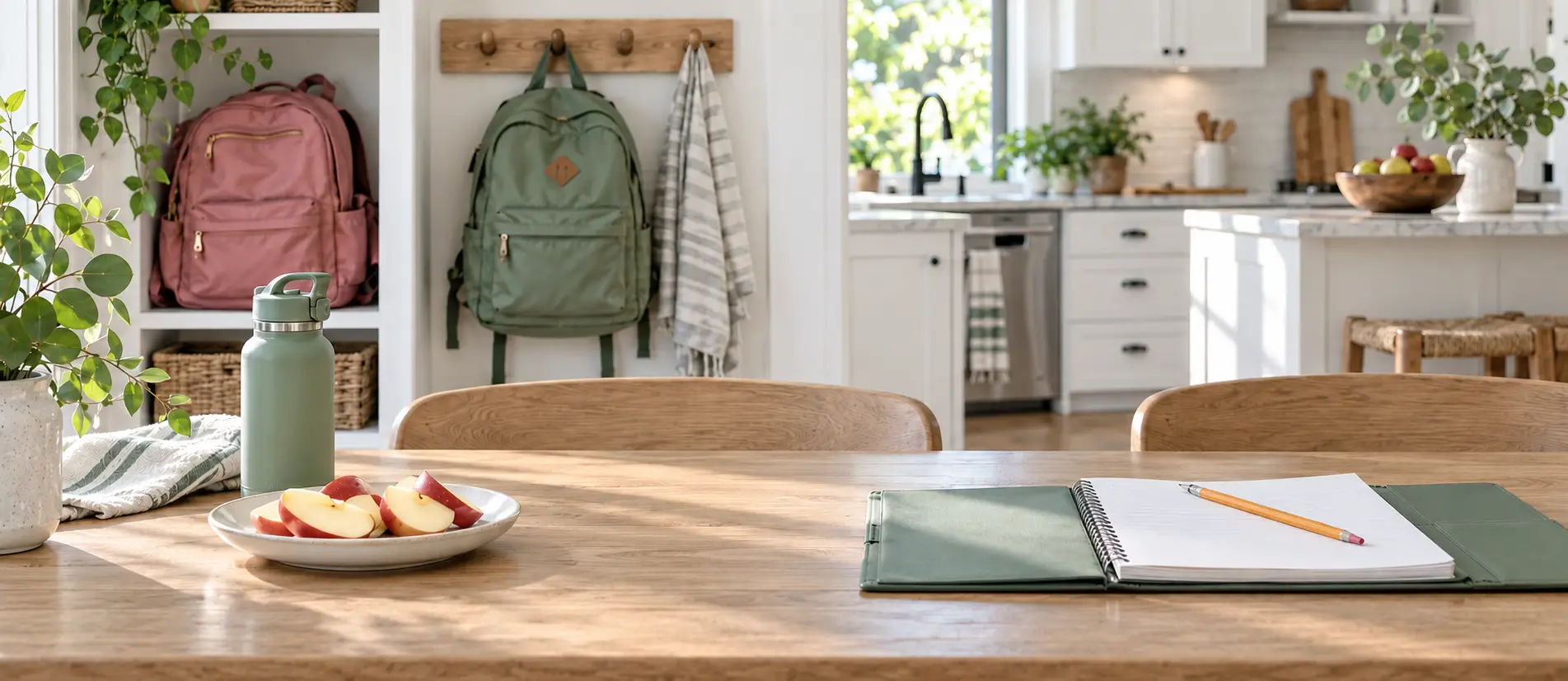
Within a few minutes of getting home, the kitchen can look completely different. A backpack lands on a stool, someone opens a snack at the counter, and a school paper ends up underneath the mail. You might still be answering a work message when someone asks where their homework is. The hours after school ask a lot of a family. Children are coming home from a full day, and the adults may be finishing work or thinking ahead to the evening. It makes sense that putting everything away isn’t the first thing on everyone’s mind.
A useful after school routine gives that part of the day a little more predictability. It can make belongings easier to find and keep the kitchen usable when dinner comes around, while still leaving children time to settle in at home. Start with the places where you find yourself doing the same pickup every afternoon, then make a few changes your family can comfortably repeat.
Give school belongings a place near where everyone comes inside
If backpacks keep landing on the kitchen island, notice what happens between the door and that counter. It may be the first convenient surface a child reaches, especially if their assigned storage is farther away or already full. Moving the storage closer to the everyday route can be more helpful than asking everyone to remember a system that’s awkward to use. You don’t need a separate mudroom to make this work. An accessible hook may be enough for a backpack, or you might have a low shelf near the garage entrance. Choose a location that leaves the walkway clear and suits the size of the bag. If you’re installing storage, follow its instructions and make sure it can safely hold what you’re putting there.
Let your child try the arrangement before deciding it’s finished. A hook that looks convenient to an adult may be hard for a younger child to reach, and a basket may be too small once a school bag is full. The easier it is to put something away, the less the task depends on reminders.
Lunch containers need a destination too. If your child brings one home, make emptying it part of arriving rather than leaving it closed in the bag until tomorrow morning. Children can do the parts that suit their abilities, with an adult handling anything that needs assistance. Follow appropriate food storage guidance for anything that needs to be put away.
School papers often need a different arrangement because someone has to read or sign them. Give those papers one familiar spot, then choose a time when an adult will check them. That might happen while reviewing the next day’s schedule, rather than in the first busy minutes after everyone gets home.
Introduce the new expectations gradually if your family is used to doing things differently. For the first few days, simply getting the backpack to its place may take some practice. You can add another step when that part feels familiar, instead of trying to change the entire afternoon at once.
Make snack cleanup part of the same activity
An afternoon snack can travel farther than you expect when someone carries it into another room. By dinner, there may be a bowl beside the couch and crumbs on the rug, even though you remember the kitchen being picked up earlier. Choosing a usual place for snacks can make the cleanup easier to finish. The kitchen table may work well, especially if children want company while they eat. Another household might use the counter while an adult prepares food nearby. Choose somewhere comfortable and practical for your family, with a surface that’s straightforward to clean afterward. Explain what finishing a snack involves in that space. A child who can carry their bowl to the kitchen can make that part of getting up from the table. If they’re ready to help wipe the eating area, keep an appropriate cloth available and show them what to do. An adult can manage any cleaning products and help with tasks that aren’t suitable for a child.
It helps to be specific about where used dishes go, since “put it away” may mean something different to everyone. You can decide on a consistent destination based on how your household handles dishes. That gives children a task they can finish without waiting for a new instruction each afternoon. The arrangement should leave room for talking and taking a break. Some children want to tell you about the day while they eat; others may prefer a quiet few minutes. Once the snack is finished, returning the eating area to a usable state can become a familiar part of moving on to the next activity. On an afternoon when everyone is hungry and you’re running late, keep the expectation small. Taking dishes back to their agreed place is still useful, even if you handle the wiping later. The routine can make the evening easier without requiring every afternoon to run the same way.
Give homework and play a simple way to be put away
Children may need a break before starting homework, and some afternoons have very little homework at all. You can leave the timing flexible while still giving schoolwork a familiar home. Knowing where to find it is often more useful than setting an exact start time that doesn’t fit the rest of the day.
If the dining table doubles as a homework area, a folder or portable container can help keep the work together. Your child can bring it out when needed and return it when they’re finished. That makes clearing the table for dinner easier and gives unfinished work somewhere to wait without getting mixed into other belongings. Try the storage you already have before buying a detailed organizing system. A simple arrangement may be easier to use when a child is tired, particularly if putting things away only takes a moment. Leave enough room inside that returning a notebook doesn’t require carefully re-arranging everything else.
Play benefits from the same kind of convenient storage. Keep frequently used toys near the place they’re usually enjoyed, with categories broad enough that children can manage the pickup. If a toy has several pieces, a container that holds the whole activity may be more practical than sorting every piece into a separate compartment.
You can also agree on what happens to something a child wants to continue later. A puzzle might stay on a suitable board, or a building project may have a spot where it won’t interfere with dinner. Having an agreed place can save the conversation about moving it from happening again each evening. Watch whether the setup actually helps after a few ordinary afternoons. If papers still spread across the table, the container may need to sit closer. If a toy basket is difficult to use, it may be too full. Adjusting the arrangement can be a reasonable first step before adding another household rule.
Use the transition to dinner for a brief shared pickup
After several hours at home, there will usually be something to put away again. The point of an after school routine is to make that work familiar enough that it doesn’t grow into a larger evening project. A brief pickup before dinner can give everyone a chance to return their own belongings while the afternoon is still fresh in their minds. Attach it to a cue your family already recognizes. You could begin when someone starts setting the table, for example, so the routine follows what is happening at home rather than depending on an exact time. Each person can take responsibility for the items they used, with help where it’s needed.
Clear instructions make this easier, especially while children are learning. Asking a child to put the game back in its box gives them a task they can recognize and finish. A general request to clean the living room can feel much larger, and may leave everyone with a different idea of what needs to happen. Keep this part of the day focused on pickup. Dusting a bookshelf or cleaning the bathroom can stay in the plan for regular house cleaning. If those jobs get added whenever the family starts putting things away, the short routine may become harder to begin the next day.
Some afternoons will need a smaller version, particularly when there’s only a little time between school and an activity. Decide what would help most before you leave again. Getting school bags into their places might be enough, with the rest handled when you’re home for the evening. You can return to the usual rhythm another day. Once you’ve tried the routine for a week, notice which changes have saved repeated work. Keep those and adjust the parts everyone is struggling to use. A family routine can develop gradually, with the aim of making home more comfortable for the people living in it.
If everyday pickup is manageable but the recurring house cleaning keeps taking over your free time, regular support may help. Flawless Finish Cleaning Crew offers biweekly and monthly residential cleaning for busy Southern Utah families. We’ll explain the cleaning scope before your first visit so you can understand how the service fits your home. Our standard residential service doesn’t include dishes or laundry, and household organizing is separate from the cleaning we provide.
To talk through the options, request your free cleaning quote. We’ll help you find a practical starting point for the cleaning you’d like taken off your week.