
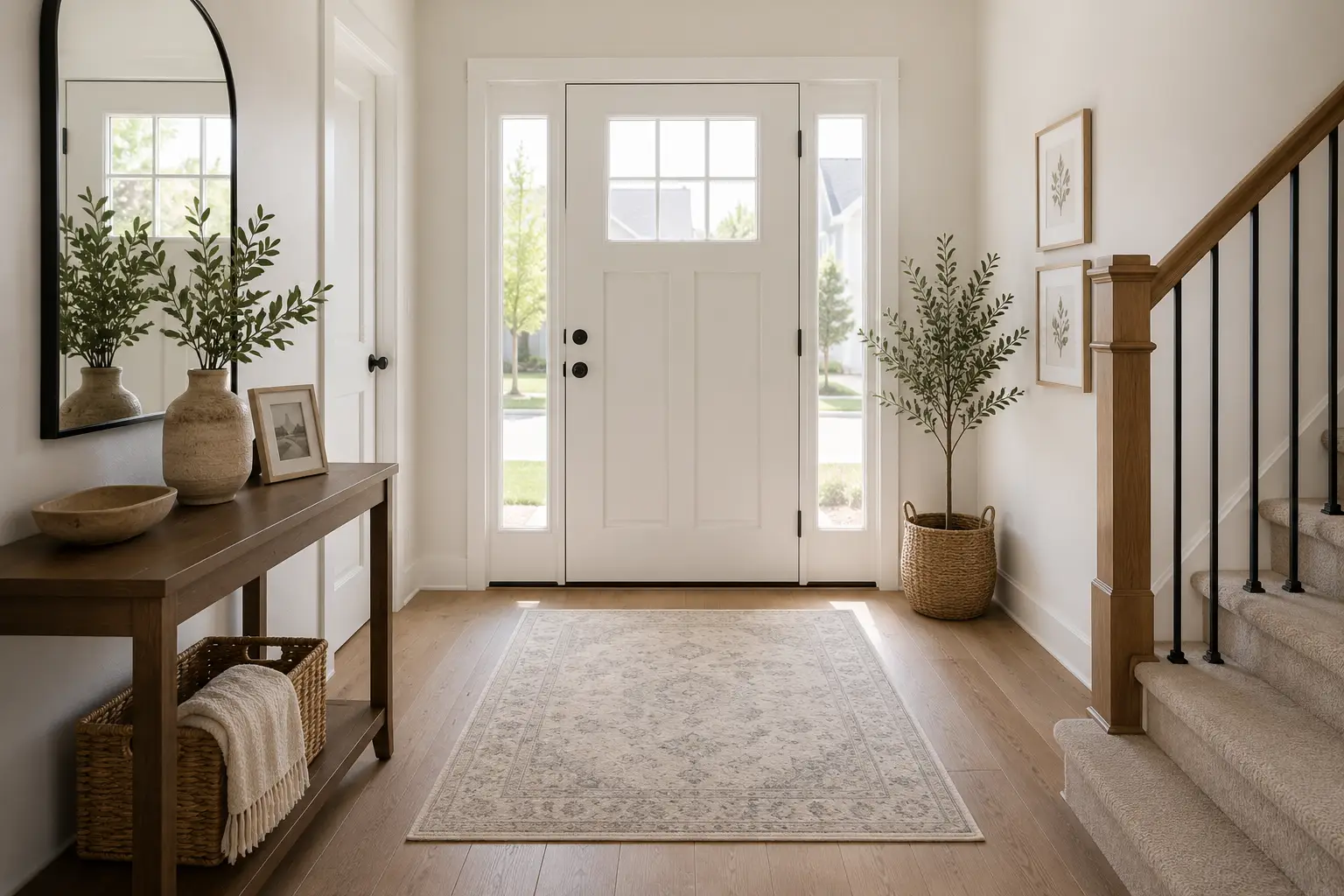
You walk through the door with your hands full, the kids kick off their shoes, and the mail gets set down wherever there happens to be room. By the time everyone has moved on to whatever comes next, the entryway is holding half the evidence of the day.
That’s pretty normal when people are constantly coming and going, but it’s also one of the reasons this small part of your home can have such an impact on how it feels to walk through the door. When the things you bring home have an easy place to go, you can settle in without immediately noticing a handful of things that need your attention.
A good entryway works with the way your family already lives, which is why it’s worth paying attention to what actually happens there before changing anything.
Pay Attention to How Your Family Uses the Entryway
Spend a few days noticing what everyone does when they walk through the door. Backpacks might land on the floor while shoes collect nearby, or maybe your purse always ends up on the same chair because that’s the most convenient place to put it while you’re carrying everything else inside.
Those little habits can tell you what would actually be useful in the space. If everyone takes their shoes off right inside the door, having a basket or shoe rack within reach makes more sense than putting one somewhere they have to remember to use. If backpacks always end up on the floor, a couple of hooks nearby might give them an equally easy place to land.
Working with the habits your family already has usually makes the space much easier to maintain.
Give Everyday Things Somewhere Easy to Go
Think about the handful of things that travel in and out of your house almost every day and give them convenient places to live near the door. Shoes may need a basket or a little room in the closet, while keys might simply need a dish or hook somewhere you’ll naturally reach for them.
If space allows, a bench or small table can be helpful when you’re walking in with groceries, bags, or a child who suddenly needs help taking off a shoe. It gives you somewhere to put things down for a minute without automatically sending everything to the kitchen counter.
The placement matters more than having an elaborate system. When putting something away is nearly as easy as setting it down, there’s a much better chance it’ll end up where you want it.
Keep Your Entryway Easy to Reset
The entryway naturally picks up more dirt than many other areas of the house because shoes, paws, wind, and everyday traffic all meet there. Keeping some open floor space makes vacuuming or mopping easier, and a washable rug can be especially helpful during those stretches when everyone seems to bring a little bit of Southern Utah inside with them.
It also helps to have somewhere for the things that tend to collect near the door temporarily. Mail can have a designated spot until someone goes through it, and the jacket that got tossed over a chair can make its way back to the closet when you have a minute.
Since most entryways aren’t very large, resetting the space can often happen while you’re already passing through. Putting away a couple of stray things or shaking out the rug every so often keeps a small amount of everyday buildup from becoming another project waiting for the weekend.
Make It Feel Like Home
Once the practical pieces are working, think about what you enjoy seeing when you walk through your own front door. A family photo, a favorite piece of art, a plant, or a lamp that gives the space a softer light in the evening can make the entry feel familiar without adding much to maintain.
The right choice is simply something that feels like it belongs in your home. After spending the day at work, running errands, getting kids where they need to be, or doing whatever else filled the hours, it’s nice for the first few feet inside the door to feel welcoming.
Start With What Would Make Coming Home Easier
Take a look at your entryway and think about what tends to happen there every day. If you’re constantly looking for your keys in the morning, a hook by the door might solve that. If everyone steps around a growing collection of shoes, giving those shoes an easy place to go could make the biggest difference.
Small changes are often enough because the entryway itself is usually a small part of the home. When it works with your family’s routine, coming and going gets a little easier, and there’s less waiting for your attention the moment you walk through the door.