
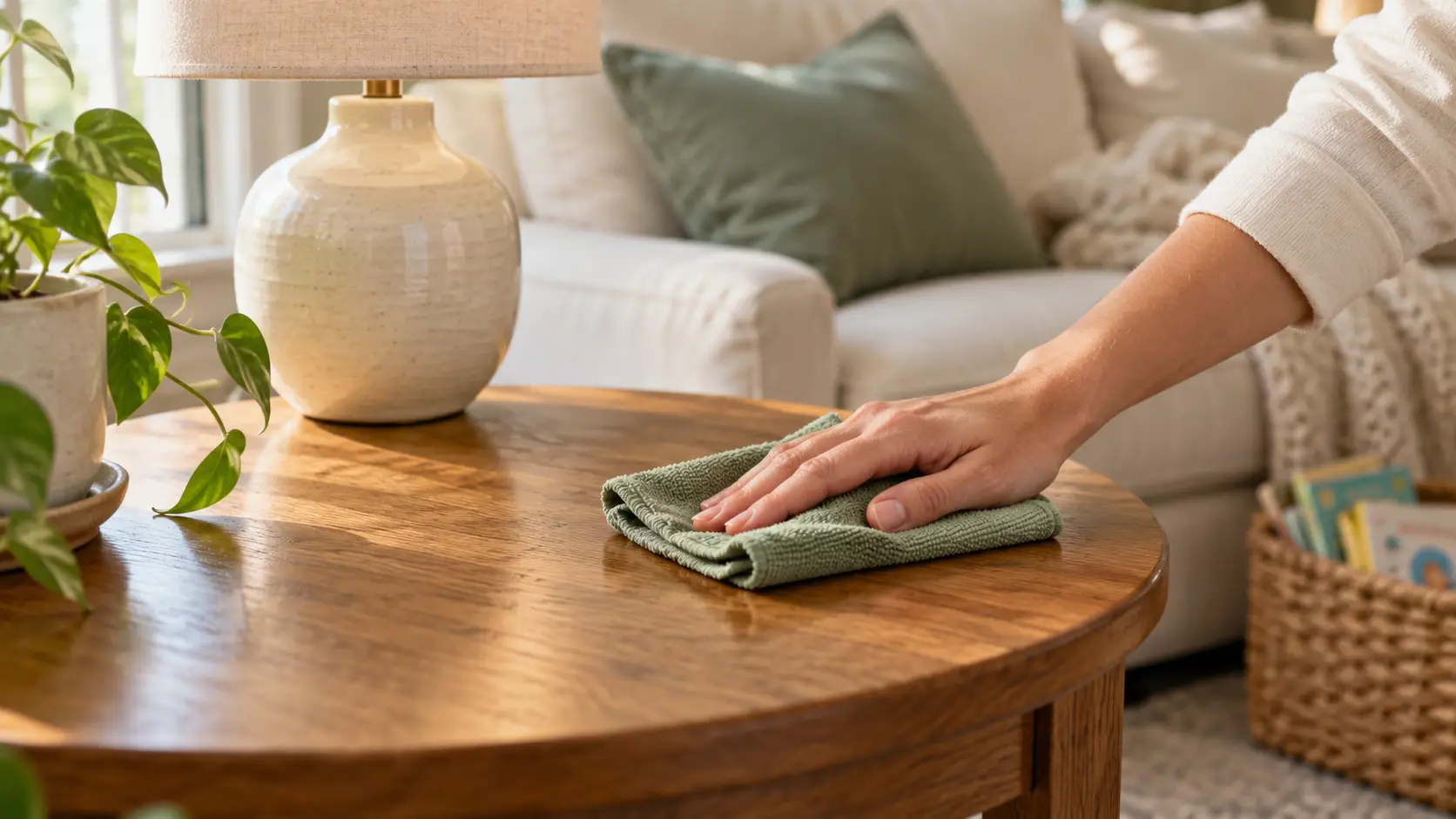
You might not notice the side table all morning, then the afternoon sun comes through the window and suddenly there’s a light layer of dust beside the lamp. You remember wiping it recently, which makes it a little frustrating to see it again when you were just about to sit down.
That happens in homes that are cleaned regularly, too. Everyday activity brings in dirt and moves dust around, so even a room that was recently cleaned will gradually need attention again. If your family spends a lot of time in the living room, it makes sense that the room will show it. A few small habits can help you keep dust manageable between cleanings without filling the time between visits with more housework. Start with the places where dust bothers you most, and choose an amount of upkeep that fits comfortably into your week.
Start with the surfaces you spend time around
When you notice dust in one spot, it’s easy to start looking around and finding it everywhere else. You start wiping the coffee table, then notice the bookshelf could use attention as well. Before long, a task you thought would take a few minutes has become an afternoon of cleaning. It helps to decide where you’re going to stop before getting started. If the table beside your chair is the thing catching your attention, you can take care of that table and leave the rest for your usual cleaning. Keeping a favorite room comfortable doesn’t require working through every surface each time you notice a little dust.
The same approach works in the bedroom. If you keep noticing dust on the nightstand when you reach for your book, give that surface a quick wipe when it suits you. The rest of the room can stay on its usual schedule. A clean microfiber cloth is useful for many everyday surfaces. Where the finish allows it, lightly dampening the cloth can help collect settled dust. It should feel barely damp rather than wet, especially around wood, and the furniture manufacturer’s care instructions should guide what you use. Fold the cloth so you can turn to a clean section as you work. Once it’s holding a noticeable amount of dust, change it or wash it rather than continuing around the room with the same dirty cloth. Having a few clean ones available makes this easier when you’ve only got a little time.
If you’re cleaning several surfaces in the same area, work downward so you can collect anything that falls when you finish the floor. Screens and electronics may need a different method, so follow their care instructions and avoid spraying liquid directly onto them.
Focus floor care on the rooms your family uses most
The floor near the back door may need attention long before the floor in a spare bedroom. Family members pass through the same routes repeatedly, and those are often the places where loose dirt becomes noticeable first. Letting your upkeep reflect that can make the work more manageable. A short vacuuming session around the living room may be enough to make it feel comfortable again between regular cleanings. You can focus on the area that needs it and leave the less frequently used rooms for their scheduled time.
It’s easier to do that when the vacuum is convenient to retrieve. If getting it out means moving storage boxes, consider whether the equipment or the boxes could have a more practical home. Small amounts of setup can be enough to put you off a job when the evening is already full. The equipment itself needs occasional attention as well. Follow your vacuums’ instructions for emptying it and maintaining its filters, and check for blockages if it doesn’t seem to be working normally. For hard floors, choose an appropriate attachment or dust mop and follow the flooring manufacturer’s care guidance.
Include the blankets and cushions you actually use
A favorite throw spends a lot of time being picked up and moved around, particularly in a room everyone shares. It’s worth including frequently used fabrics in your household care routine, while keeping occasional jobs such as curtain cleaning on a separate schedule.
Check the labels before washing anything, since a cushion cover may need different care from the blanket beside it. If the item is washable, choose a time that works with the laundry you’re already doing instead of creating another daily task.
Try to avoid shaking a dusty throw over the couch or a floor you’ve just cleaned. That can send loose dust back into the same area. Following the item’s recommended care method will usually be more useful than giving it a quick shake and putting it straight back.
On a busy week, vacuuming the family room and washing the most frequently used blanket may be all the extra attention you want to give that space. You can adjust the amount of work as you see what the room needs.
Make it easier to leave outdoor dirt near the door
The entrance your family uses most is a useful place to look if the floors seem to need attention soon after cleaning. In some homes, that’s the garage door beside the kitchen. The front entrance may look lovely while the everyday route into the house has nowhere convenient for shoes. A suitable mat gives everyone a place to wipe their shoes before coming farther inside. Position it so it stays flat without obstructing the door, and give it attention when it begins collecting debris. Follow its care instructions and remember to clean the floor underneath when you lift it.
If taking shoes off inside suits your household, a low shelf near the door may help. Keep the storage easy to use when someone arrives with their hands full, with enough room for the pairs your family wears regularly. Children need somewhere they can reach, and visitors should be able to understand where things belong without a lengthy explanation.You may also notice a difference on days when windows or doors stay open. If outdoor dust is visibly coming inside, adjust when you open them and see whether it helps. The arrangement can change with the weather and the way your family uses the house.
For Southern Utah families who spend time outdoors, some dirt will still come home with everyone. A practical entrance gives you somewhere to collect it before it travels farther through the rooms you use most.
Arrange favorite belongings so dusting is easier
Sometimes the part that makes dusting feel like a job is moving everything first. A shelf of small ornaments can take a while to clear, even when wiping the surface underneath would only take a moment. If you keep postponing the same area, consider whether its arrangement is adding more work than you’d like.
Try taking the objects off one surface and putting back the pieces you most enjoy seeing. You might keep a favorite photograph beside the lamp and move a few smaller decorations elsewhere. Live with it for a few days before deciding whether you miss anything.
For a collection you love, displaying some pieces at a time is another option. You can still enjoy what makes the room personal while reducing how much you move during ordinary cleaning. Some belongings will be worth the extra care to you, and that can be part of the decision. Everyday items need convenient places too. If paperwork keeps covering the side table, a nearby drawer or a designated spot for papers may make the surface easier to reach. Use the storage you already have where it works, and check whether family members can return their things without having to rearrange everything inside. As the room becomes easier to pick up, a little dusting can fit more naturally into the upkeep you’re already doing. You could wipe the nightstand when changing the bedding, for example, rather than adding it to a new list of evening chores.
Keep the work small enough to leave room for home life
Dust will probably catch the sunlight again, even after you’ve found a routine that works well. You can use that as a reminder to give an area attention when it needs it, without treating every visible speck as something to address immediately. If a brief touch up regularly turns into a full cleaning session, it may help to review how the larger jobs are being handled. Some families share that work differently; others find that recurring professional cleaning gives it a dependable place in the schedule.
Flawless Finish Cleaning Crew offers biweekly and monthly residential cleaning for busy Southern Utah families. Before your first visit, we’ll explain the cleaning scope and how to prepare so you know what to expect. Our standard residential service doesn’t include dishes, laundry or household organizing. If regular cleaning would help keep your evenings or weekends from filling up with housework, request your free cleaning quote. We’ll walk through the options with you and help you find a practical starting point.